Health
The Living Skeleton: Why Grip Strength Says More About Ageing Than You'd Think
Last updated on
You've probably heard that grip strength predicts how well you'll age. It's one of those facts that gets repeated often enough to feel true, without anyone explaining why. Part of the answer starts with your bones.

Your Skeleton Isn't Fixed. It's Under Renovation.
It's easy to picture bone as a fixed scaffold; something built once in childhood and left to hold you up. In reality, bone is living tissue, rebuilt continuously through a tug of war between two types of cells: some that build new bone (osteoblasts), and others that break old bone down (osteoclasts). Depending on that balance, you will have a higher or lower bone mineral density.
One of the biggest drivers of that process is mechanical load. Bone responds to being challenged. Ask more of it, and it adapts. Ask less, and it doesn't.
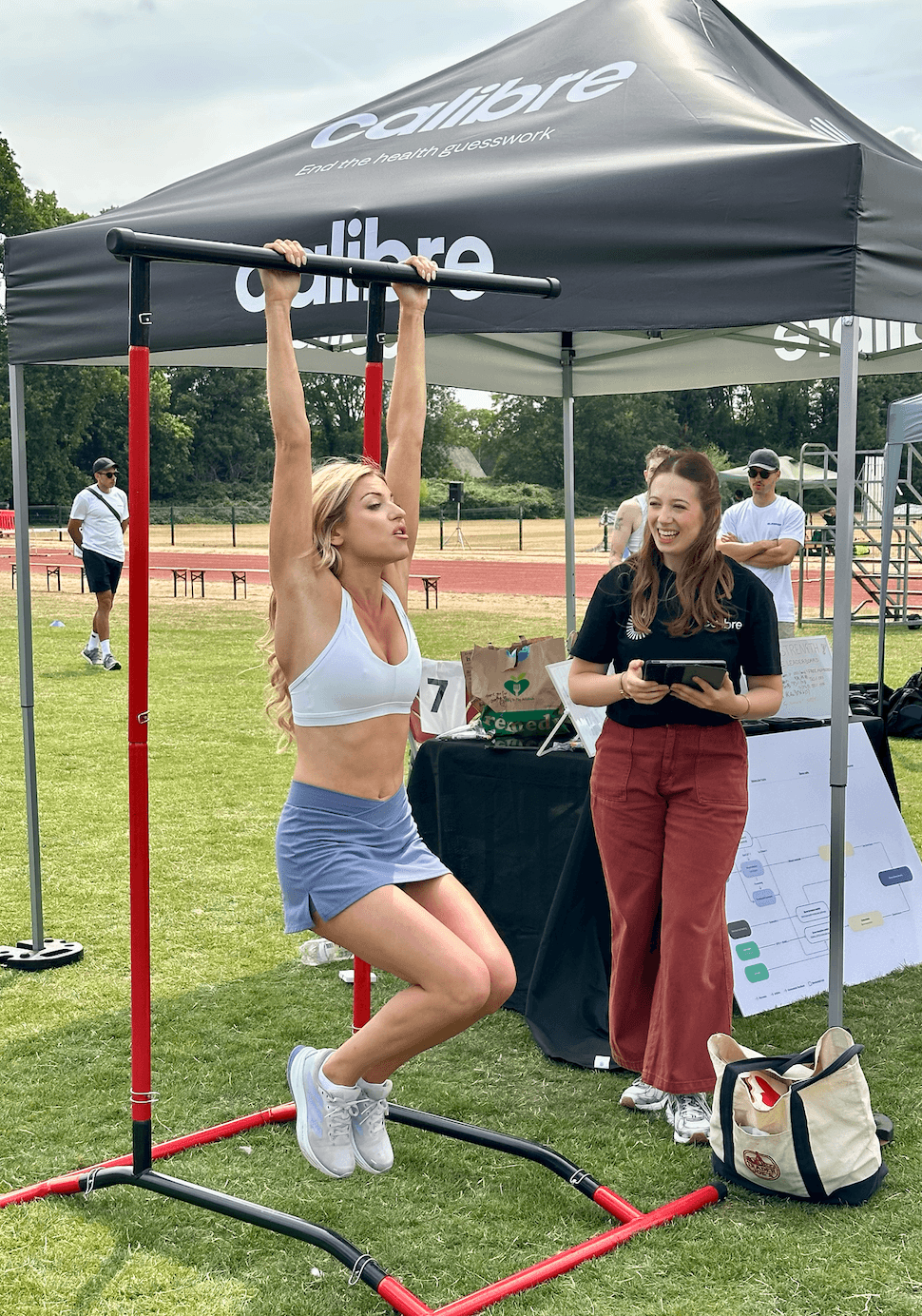
That's where grip strength comes in. It isn't just about how hard you can squeeze something. It's a useful proxy for your overall muscle strength, and for how much load your body is accustomed to handling day to day. More load causes more bone formation cells to form, ultimately increasing your bone mineral density.
Why This Matters More As You Age
Consider what can unfold after a fall later in life:
Lower bone mineral density makes a fracture more likely.
A fracture, particularly to the hip, can mean a long period of recovery.
That recovery time can cost you muscle, which becomes harder to rebuild with age.
Less muscle can mean less activity, independence, and time spent doing what you love.
And the cycle continues.
The consequences can be serious. One year mortality after a hip fracture sits between 20 and 30 percent. That is the reason the decades before a fall matter so much: bone density and muscle mass are largely built or lost long before any single incident.
The Risk Factors Most People Never Check
Despite this, most people tracking their health rarely measure the markers that actually explain it: grip strength, vitamin D, calcium, oestrogen and cortisol are the causal markers of bone turnover. On their own, each is a data point. Together, they start to build a clearer picture of what's really driving your long-term health, and where your risk factors sit today.
Your skeleton is being rebuilt this week, whether you pay attention to it or not. The question worth asking is what you're giving it to work with.
Where Calibre Fits In
This is precisely the kind of question Calibre is built to answer. By starting with a causal understanding of the outcome, we work backwards to help you understand what’s driving it. By connecting the right diagnostic tests, with your lifestyle and wider health context, we build a more complete picture of the mechanisms shaping your long-term health and focus on the few changes most likely to matter.
Doctor-led and CQC-regulated, Calibre turns that understanding into clear, personalised action.
End the health guesswork.

